Part 2: Trauma and the Soul: Understanding Its Impact on Thoughts, Emotions, and Behaviours

By Susan Adeyemi, Counsellor, & Author

- How Trauma Shapes Thinking
- Statistics in the UK
- Practical Indicators of Unresolved Trauma on Thought Patterns.
- Ways to Overcome
- Reflection Questions
- GET YOUR GUIDE ON MANAGING NEGATIVE EMOTIONS
- Related Articles
How Trauma Shapes Thinking
Trauma often creates distorted thought patterns, including hypervigilance, catastrophic thinking, low self-worth, and difficulty trusting others. These thought patterns are protective mechanisms developed in response to fear but can become mental strongholds that imprison the mind.
Research from the Royal College of Psychiatrists (2023) shows that individuals with unresolved trauma are more likely to struggle with negative self-beliefs and intrusive memories, leading to anxiety and depression.
Biblical Insight:
“Do not conform to the pattern of this world, but be transformed by the renewing of your mind.” (Romans 12:2, NIV)
God’s Word invites us to replace distorted thoughts with His truth, but trauma can make this process feel like a battle.
Statistics in the UK
Approximately 1 in 3 adults in the UK have experienced trauma during childhood (NHS Digital, Mental Health of Children and Young People in England, 2023).
A 2022 UK Trauma Council report highlighted that over 40% of adults report adverse childhood experiences, with many carrying these wounds into adulthood, affecting mental health and relationships.
Practical Indicators of Unresolved Trauma on Thought Patterns.
- Overthinking worst-case scenarios
- Persistent feelings of worthlessness
- Mistrusting even safe people
- Difficulty making decisions due to fear of failure
- Persistent negative self-talk (“I’m worthless,” “I always fail”).
- Catastrophic thinking (expecting the worst to happen).
- Perfectionism driven by fear of making mistakes.
- Hypervigilance (always scanning for danger or betrayal).
Example Scenario:
James, 42, was repeatedly criticised by his father growing up. Now at work, he constantly fears making mistakes, re-checks emails multiple times, and has sleepless nights worrying about being fired, despite being competent.
Ways to Overcome
– Identify the thought: Write down recurring negative thoughts.
– Challenge the lie with truth: Replace “I always fail” with “I can learn and grow, and God is with me” (Philippians 4:13).
– Renew the mind daily (Romans 12:2) by memorising affirming Scriptures like Jeremiah 29:11.
– Counselling and CBT tools can help reframe distorted thinking patterns.
Reflection Questions
- What repetitive negative thoughts do you notice in your daily life?
- Have you invited God into the areas where your thoughts feel trapped?
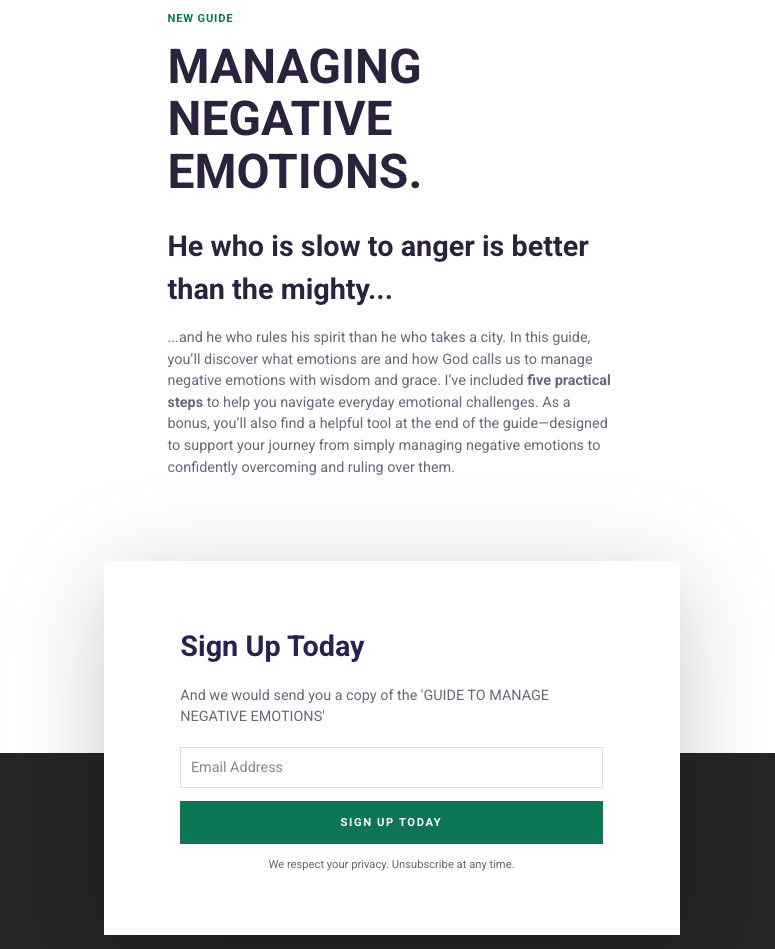
Use the GUIDE BELOW to evaluate your emotions. It also offers practical and biblical methods to manage negative emotions.
GET YOUR GUIDE ON MANAGING NEGATIVE EMOTIONS
Share your story in the comments and with others.
Your experience can bring light and encouragement to someone else navigating the same struggle. If this post helped you, share it with a friend who may be silently battling fear