Part 3: Trauma and the Soul: Understanding Its Impact on Thoughts, Emotions, and Behaviours

By Susan Adeyemi, Counsellor, & Author

How Trauma Impacts Emotional Responses
Trauma affects the ability to regulate emotions, often resulting in emotional numbness, chronic anxiety, irritability, or outbursts. The amygdala (fear center) becomes overactive, making individuals easily triggered by reminders of past pain.
A 2021 UK survey by Mind found that over 50% of adults who experienced childhood trauma report ongoing struggles with anxiety and emotional dysregulation in adulthood.
Scriptural Insight:
“He heals the brokenhearted and binds up their wounds.” (Psalm 147:3, NIV)
God acknowledges our emotional wounds and offers healing, but many Christians struggle to accept and process emotions, believing faith should silence them rather than guide them toward healing.
Signs Trauma is Affecting Your Emotions:
- Feeling emotionally numb or disconnected
- Overreacting to minor issues
- Difficulty expressing feelings safely
- Chronic feelings of fear or shame
Practical Indicators of Unresolved Trauma on Emotions
- Feeling numb or emotionally shut down.
- Frequent outbursts of anger or irritability.
- Sudden crying spells without clear reasons.
- Constant fear or anxiety even in safe environments.
- Shame and guilt that are persistent and irrational.
Example Scenario:
Laura, 28, grew up with an emotionally unavailable mother. Now, when her close friend does not respond immediately to a message, Laura feels deep anxiety and fear of rejection, interpreting silence as abandonment.
Ways to Overcome
– Identify the thought: Write down recurring negative thoughts.
–Name the emotion: Journal feelings instead of suppressing them.
– Challenge the lie with truth: Replace “I always fail” with “I can learn and grow, and God is with me” (Philippians 4:13).
–Pray honestly: Pour out feelings before God (Psalm 62:8).
– Renew the mind daily (Romans 12:2) by memorising affirming Scriptures like Jeremiah 29:11.
– Counselling and CBT tools can help reframe distorted thinking patterns e.g., Emotion regulation tools: Pause and breathe before reacting, naming the feeling aloud.
- Safe relationships: Practice expressing emotions with trusted friends who can offer reassurance.
Reflection Questions
- Which emotions do you find hardest to manage or acknowledge?
- Do you feel safe enough to bring your raw emotions before God?
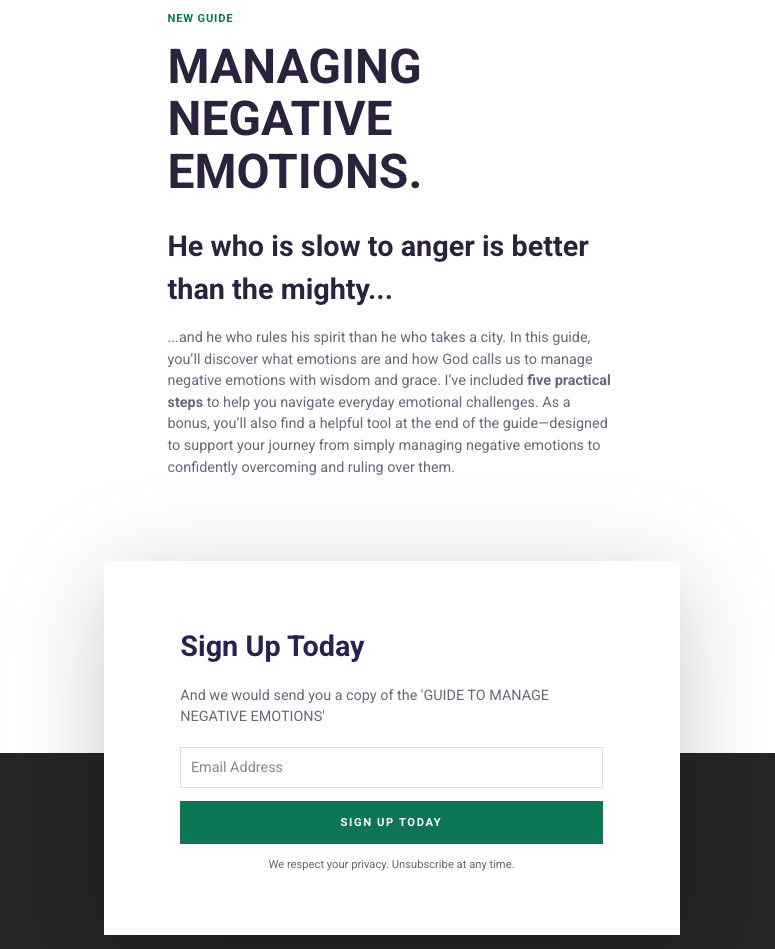
Use the GUIDE BELOW to evaluate your emotions. It also offers practical and biblical methods to manage negative emotions.
GET YOUR GUIDE ON MANAGING NEGATIVE EMOTIONS
Share your story in the comments and with others.
Your experience can bring light and encouragement to someone else navigating the same struggle. If this post helped you, share it with a friend who may be silently battling fear